We’re here to make sure you’re a well-informed fan, athlete and event planner who is in the know whether you’re pushing off the starting blocks, it’s the bottom of the ninth or it’s the final two minutes of overtime. 

If it’s your first time in Durham for an event, we have your guides for how to make the most of your experience. If you’re a local looking for sporting events to attend this season, we have you covered with our season previews. And if you want to learn more about sports culture in Durham, you’re in the right place too.  

By Brianna DeLeon

I’m a sophomore at UNC-Chapel Hill from Charlotte and have been interning with the Durham Sports Commission since August. Before entering the sports industry professionally, I experienced it first as an athlete. I wrestled throughout high school, becoming a three-time state champion and competing nationally. I considered wrestling in college, but opportunities for women at the collegiate level were limited, and while the sport has grown significantly, those opportunities are still developing today. Since coming to UNC, I have played women’s rugby and founded the UNC Women’s Wrestling Club, where I now serve as co-president. More recently, I’ve found a new challenge through triathlons and Ironman training.

Needless to say, I love sports. But the McLendon Foundation Experience reminded me that the sports industry extends far beyond what happens on the field, mat or course.

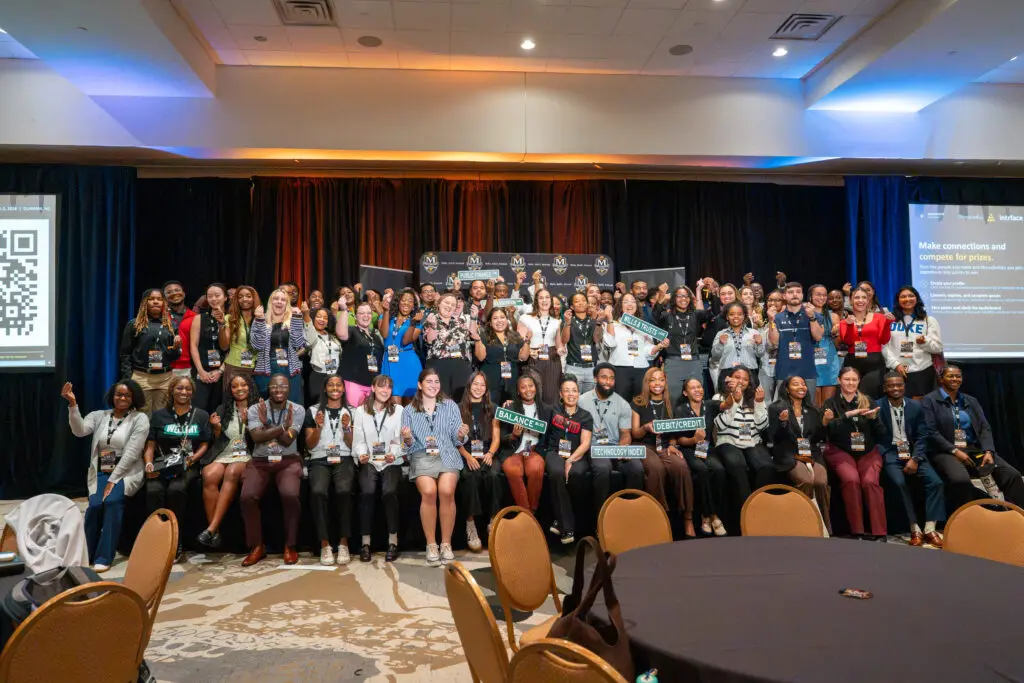
Over two days in Durham, I had the opportunity to meet students, young professionals and industry leaders from across the country. Many of us shared a connection through athletics, with a large portion of attendees having competed as student-athletes. That immediately created a sense of community, even among people pursuing completely different areas of the sports industry.

One of my biggest takeaways came from Jon Patricof, co-founder and CEO of the Athletes Unlimited Softball League (AUSL). He spoke about the importance of being specific to stand out, but what resonated with me most was his discussion of pattern recognition. Sometimes the greatest opportunities are the ones other people don’t see yet.
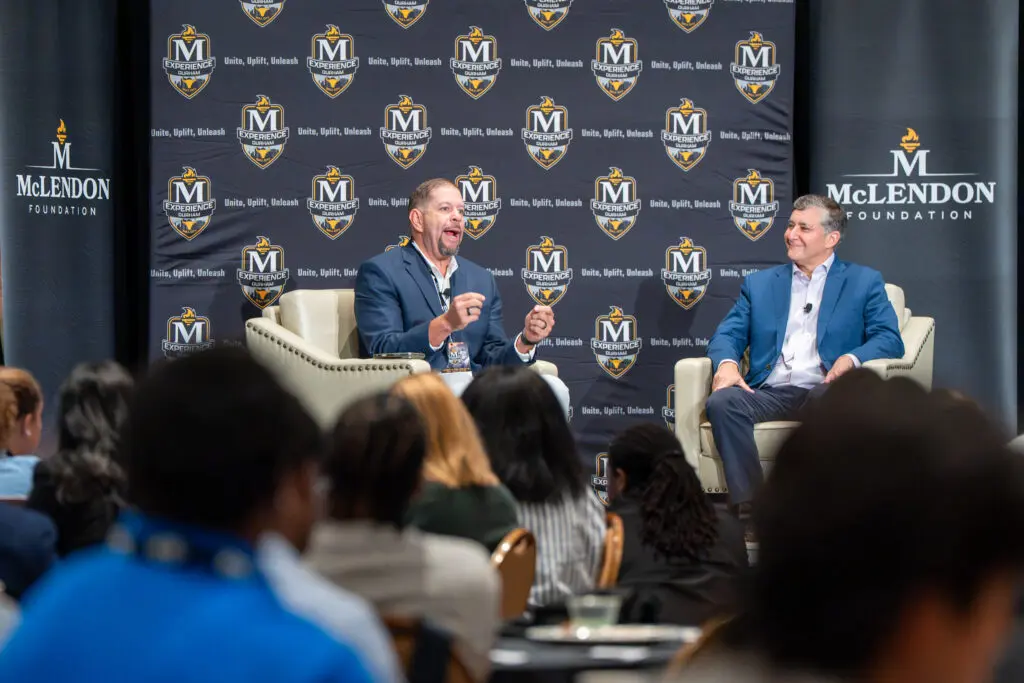
That idea especially stuck with me because of my own experience in women’s wrestling. I have watched the sport grow tremendously, even in the short time since I was deciding whether to wrestle in college. It made me think differently about emerging areas of sports: instead of seeing what does not exist as a limitation, there may be an opportunity to help create what comes next.

Other sessions gave me tools I could begin using immediately. Barbara Salami, co-founder and CEO of Kaindly, led a workshop on working smarter with artificial intelligence from day one. One analogy stuck with me: AI is the car, but you are the driver. It only goes where you steer it. Learning how to prompt AI effectively and use it intentionally reinforced that technology is most valuable when paired with human direction and creativity.

Britt Hunter, founder of Be the Exception Coaching, led another memorable session focused on pitching your message and communicating your capabilities. We worked on telling our stories through elevator pitches, asking better questions in interviews and identifying the experiences that make us different. It was a reminder that having experience is only part of the equation—you also have to be able to communicate what you learned from it and how it can provide value to someone else.

Some of the most useful lessons throughout the Experience were also the simplest: follow up, be specific, be prepared and continue building your network. These were not necessarily new concepts to me, but hearing how professionals across the industry put them into practice gave me a better idea of how I can do the same.

One idea that particularly stuck with me came from Durham Sports Commission Executive Director Marcus Manning. He shared a question that Kaila’Shea Menendez had was once asked him: “How can I actualize and make tangible the vision you have?” I already like asking employers about their goals and where they hope to take an organization, but this question takes that one step further. Instead of simply understanding someone’s vision, it challenges you to think about how your own skills, ideas and role can help move it forward. It is a question I want to carry into future interviews and opportunities, but also one I can apply right now by thinking about how I can contribute to the vision of the Durham Sports Commission throughout my internship.
Another line I wrote down during the Experience was, “Fear kills more dreams than failure ever will.” For me, that captured much of what the two days were about. Whether it is introducing yourself to someone you admire, pursuing an opportunity you are not completely sure you are ready for or bringing a new idea to the table, growth requires being willing to take that first step.

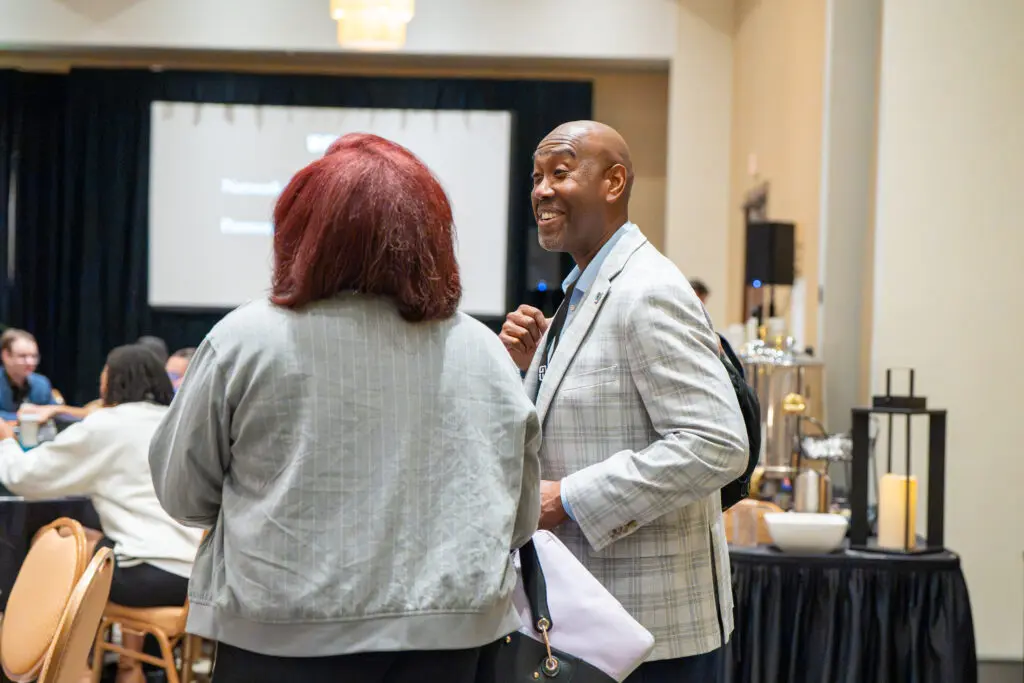
Beyond the speakers and workshops, some of my favorite parts of the Experience came from the people I met. I connected with peers from across the country and had meaningful conversations with industry leaders working across different areas of sports. The format of the event made those interactions feel natural. Larger speaker sessions were balanced with smaller workshops and more intimate conversations, giving us opportunities to explore our individual interests while also being exposed to areas of the sports industry we may have never considered.

The McLendon Foundation Experience was built around three words: Unite, Uplift and Unleash. Looking back on the two days, I think the Experience accomplished all three. It united people from across the country through a shared interest in sports, uplifted us through the knowledge and support of industry leaders, and gave us the tools and confidence to take what we learned into our own careers. Bringing an event like this to Durham creates an impact beyond the event itself. It brings new people and perspectives into our community while giving students and young professionals the opportunity to build relationships, develop practical skills and see more of what a career in sports can look like.

For me, these two days reinforced that I don’t need to have every step figured out yet. I need to keep learning, keep building relationships, recognize opportunities and be willing to pursue them when I see them.

And, most importantly, be willing to create them when they aren’t there yet.
We’re here to make sure you’re a well-informed fan, athlete and event planner who is in the know whether you’re pushing off the starting blocks, it’s the bottom of the ninth or it’s the final two minutes of overtime. 

If it’s your first time in Durham for an event, we have your guides for how to make the most of your experience. If you’re a local looking for sporting events to attend this season, we have you covered with our season previews. And if you want to learn more about sports culture in Durham, you’re in the right place too.  

Race day is almost here and having a plan for the weekend is always key. Whether you’re running, spectating, or a Durham resident trying to navigate the course, read below to know more about what to expect for the Garmin Marathon.

Race Expo 

  • Location: CCB Plaza, 201 Corcoran St, Durham, NC 27701
  • Time: Thursday, 4/30, 2-7 pm – Friday, 5/1, 9 am – 7 pm
  • Runners can pick up their race packet, as well as explore local and national vendors throughout the plaza and adjoined streets.  
  • There will also be a 3 mile shakeout run on Thursday, 4/30 that will start from CCB Plaza at 6:30, led by Crank Arm Run Club. (RSVP HERE)
  • Explore downtown and grab dinner and/or a drink after picking up your packet from the expo! 
  • Road Closures 
    • Market Street (Fully Closed) 
    • West Parrish Street (Between Market Street and Corcoran Street) 
    • Corcoran Street (Between Parking Garages and E Chapel Hill Street)
    • Market St. and Parrish St. between Market St. and Corcoran St. will be closed starting at 1:00pm on Wednesday, April 29 for the set up.
  • Stop by the Discover Durham Visitor Info Center (212 W Main St #101, Durham, NC 27701) on Thursday and Friday during the expo for a sign writing activation!  

Sign Writing At Durham Visitor Info Center

Stop by Durham's Visitor Info Center, right next to the race expo, to make a sign to support your runners!


Race Day, Saturday, 5/2 

  • Marathon, half-marathon and 10K start time will be 7 am. 
  • 5K start time is 7:20 am. 
  • The race begins at 7 am at American Tobacco Campus (409, Blackwell Street, Durham, NC) 
  • Parking the morning of race day is available at the following garages 
    • Durham County Justice Center Garage (502 S Dillard St) 
    • American Tobacco Campus East Garage (250 S Mangum St) 
    • American Tobacco Campus North Garage (305 W Pettigrew St) 
    • American Tobacco Campus South Garage (653 Jackie Robinson Dr) 
    • Corcoran Street Garage (101 Corcoran St) 
    • Church Street Garage (109 S Mangum St) 
  • Beginning at 7:30 am, there will be shuttles that will run from the finish line back to the start line. Spectators will be able to take the shuttle to the finish line after the start of the race, and both spectators and racers will be able to shuttle from the Finish Line Festival back to the starting area for easy access to their vehicles.

Additional Road Closure Information 

  • Blackwell Street will be closed on Friday, May 1 at 10 pm.  
  • Additional streets will be affected beginning at 7 am on 5/2. 
  • These streets will reopen as soon as the last runner passes through that area. 
  • Below are all streets that will be affected and in order roughly what point in the race the runners will be passing through. Please refer to the official course maps to see what part of each road will be affected.  
  • Google Maps Versions of Course Routes 
  • Note that the streets below are affected varying amounts and will reopen at varying times.  
    • Blackwell Street  
    • East Chapel Hill Street  
    • N Mangum Street  
    • W Trinity Avenue
    • Foster Street  
    • Washington Street  
    • Watts Street  
    • Engelwood Avenue  
    • Broad Street  
    • S Gregson Street  
    • Vickers Avenue
    • W Club Boulevard
    • Virginia Avenue
    • Woodrow Street  
    • Alabama Avenue
    • Green Street  
    • Clarendon Street  
    • W Markham Avenue
    • N Buchanan Boulevard 
    • W Main Street  
    • S Roxboro Street  
    • W Pettigrew Street 
    • S Mangum Street  
    • Jackie Robinson Drive
    • E. Forest Hills Boulevard 
    • W Lakewood Avenue  
    • University Drive 
    • E Woodridge Drive
    • Stuart Drive  
    • Hope Valley Road  
    • Morehead Avenue  
    • Cranford Road 
    • Academy Road
    • The Marathon and half-marathon will also be run on parts of the American Tobacco Trail and the Third Fork Creek Trail. Expect delays and heavy foot traffic on both. 

Finish Line Festival 

  • .The Finish Line Festival will take place at Wallace Wade Stadium at Duke University.
  • There will be music, entertainment, recovery food and drink, and additional activations.  
  • Shuttles will be available back to the start line. You encouraged to take the shuttle, as parking will be limited at the Finish Line Festival.
  • The course and the Finish Line Festival will end at 2:30 pm.

For where to check out while you’re in town before, during and after the race, read our blog on how to make the most of your Garmin Marathon Experience.  

We’re here to make sure you’re a well-informed fan, athlete and event planner who is in the know whether you’re pushing off the starting blocks, it’s the bottom of the ninth or it’s the final two minutes of overtime. 

If it’s your first time in Durham for an event, we have your guides for how to make the most of your experience. If you’re a local looking for sporting events to attend this season, we have you covered with our season previews. And if you want to learn more about sports culture in Durham, you’re in the right place too.  

By William Townsend

This final chapter of Durham Sport’s Black History tells a different story. And safe to say it’s only beginning to be written. This is the era where Black Durham does not simply participate in sport, but governs it, elevates it, and sustains it. What earlier generations fought to access, this generation has worked to strengthen.

When North Carolina Central University officially began its transition to Division I athletics in 2007, the move represented more than competitive ambition. It symbolized confidence. NCCU, founded in 1910 during the height of segregation, was stepping onto the national stage in a new way.

The early 2000s required vision and stability. Under long-term athletic leadership, the university strengthened its facilities, expanded recruiting, and prepared for the rigorous standards of Division I competition. That groundwork paid off. Since completing its transition, NCCU has established itself as one of the top HBCU athletic programs in Division I. Under the leadership of head coach Trei Oliver, the Eagles have made several Celebration Bowl appearances, including defeating the Deion Sanders-led Jackson State in the 2022 Celebration Bowl Championship. The men’s basketball team, led by famed coach LeVelle Moton, has reached the NCAA Tournament four times, continuing a legacy that dates back to the brilliance of John B. McLendon.

Yet the true power of NCCU athletics extends beyond trophies. Game days at O’Kelly-Riddick Stadium are community gatherings layered with history. Alumni of Hillside High School sit beside new students. Families whose grandparents once attended Negro League games in Durham now cheer on Division I athletes in nationally televised matchups. The institution that began as the National Religious Training School now competes on a stage once closed to it. That arc reflects the broader Durham story.

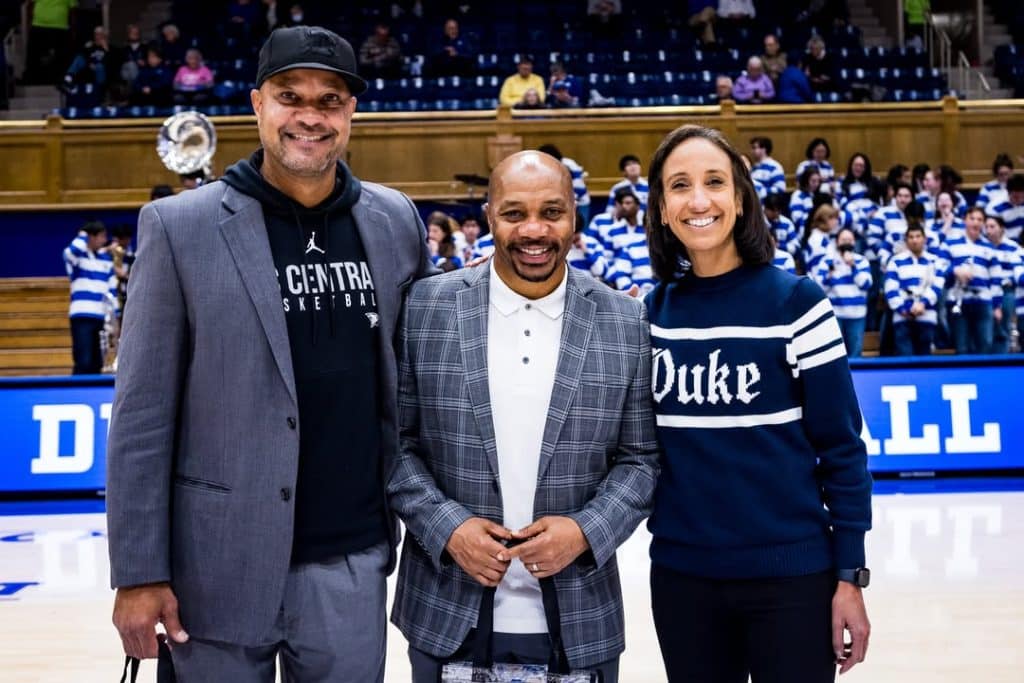
In the modern era, representation has expanded beyond the playing surface. The rise of leaders such as Nina King signals a generational shift. Beginning her tenure at Duke University in 2008, King ascended to Vice President and Director of Athletics. King, along with NCCU Athletic Director Dr. Skip Perkins and Durham Public Schools Athletic Director David Hackney, represent Black leadership in sports in Durham at the highest levels.

This transformation matters within the broader Durham context. The same city that once required secrecy for interracial competition now sees Black administrators overseeing multimillion-dollar departments, negotiating conference realignments, navigating NIL policy, and shaping national athletic strategy.

Despite the growth of executive leadership and national visibility, Durham’s sports story still begins locally. Public school programs, particularly at Hillside High School, continue to produce elite talent. Athletes such as Greg Little carried Durham pride from neighborhood fields to national recognition. As an All-American who advanced to UNC and eventually the NFL, Little’s journey reflected the durability of Durham’s grassroots infrastructure.

His rise reinforced a pattern that stretches back to Hillside Park High School’s early dominance. The fields may look different today. Recruiting now includes digital platforms and national rankings. Yet the foundation remains community-driven. Youth leagues, mentorship programs, and local coaches continue to connect athletics with academic responsibility and character development.

Durham’s Black sports culture has long understood that sport is not an endpoint. It is a vehicle. It provides scholarships, exposure, and opportunity, but it also reinforces discipline, pride, and civic responsibility. That philosophy continues to shape the pipeline from Durham neighborhoods to collegiate and professional arenas.

The period from 2000 to the present day reveals a Durham that has moved from exclusion to influence. In earlier eras, African Americans built parallel systems under Jim Crow. They established leagues, clubs, and schools when access was denied. They risked arrest and reputational harm to compete across racial lines Their goal was entry. Today, the goal is sustainability.

The challenges have evolved. NIL agreements reshape recruiting landscapes. Social media magnifies athlete visibility. Conference realignment redefines institutional alliances. Yet Durham enters this era with something earlier generations fought hard to secure: institutional presence.

Black Durham does not stand outside the system looking in. It is embedded within the system, influencing it. From El Toro Park to Division I stadiums. From the Algonquin Tennis Club to executive boardrooms. From whispered games to national broadcasts. Durham’s Black sports history is not a straight line. It is a continuum. Each era layered upon the one before it. Each generation inherits responsibility along with opportunity.

As Black History Month comes to a close, we celebrate and reflect those who blazed the trail. But the impact of Black leaders in Durham goes far beyond just February. We celebrate Black leadership, innovation, and athletic greatness in Durham sports today and every day.

We’re here to make sure you’re a well-informed fan, athlete and event planner who is in the know whether you’re pushing off the starting blocks, it’s the bottom of the ninth or it’s the final two minutes of overtime. 

If it’s your first time in Durham for an event, we have your guides for how to make the most of your experience. If you’re a local looking for sporting events to attend this season, we have you covered with our season previews. And if you want to learn more about sports culture in Durham, you’re in the right place too.  

By William Townsend

After an era of revitalization and change for African American sports in Durham, acceptance was officially in place for Black athletes. A new era had come into the frame, with many athletes breaking barriers in the face of adversity. These pioneers not only lifted their communities but also made waves at new institutions. What followed in the 1970s, 1980s, and 1990s was not simply participation, but sustained excellence. Durham’s Black athletes became champions in every sense of the word.


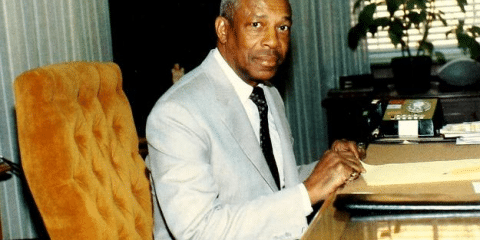
The 1970s marked a period of dominance and national recognition for Black collegiate athletics in Durham, led by Leroy T. Walker at North Carolina Central University. Walker’s impact on Durham sports cannot be overstated. As head coach of NCCU’s track and field program, he built one of the most successful collegiate track dynasties in the country. Under his leadership, NCCU athletes captured multiple national titles and individual championships, regularly outperforming programs with far greater resources. Under Walker’s reign, the Eagles produced 30 national titles, 77 All-Americans, and five Olympic medalists. Walker’s teams did not simply compete at the national level, they set the standard. Beyond the wins, Walker’s greatest legacy was the athletes he developed. He coached and mentored Olympians and world class competitors, including gold medalists and record holders who carried Durham’s name onto the global stage.

While NCCU solidified its standing in the 1970s, Durham’s high schools continued to function as cultural anchors through this era. Hillside High School remained a cornerstone, producing athletes who carried the city’s identity with them wherever they competed. Among the most influential was Rodney Rogers, whose journey represented a full-circle moment for Durham sports. A standout at Hillside, Rogers embodied the power of Durham’s public school system to cultivate elite talent. Drafted into the NBA in 1993, he built a career defined by toughness, versatility, and longevity. His later recognition as NBA Sixth Man of the Year validated not only his individual success, but also the environment that shaped him. For Durham’s Black community, Rogers was proof that national recognition could begin on local courts. His visibility inspired younger athletes and reinforced the importance of investing in community based programs and schools.

As Durham entered the 1990s, the city’s sports identity expanded further through the national prominence of Grant Hill. Hill’s arrival at Duke University coincided with the program’s rise to the pinnacle of college basketball. Leading Duke to back to back national championships in 1991 and 1992, Hill became one of the most recognizable athletes in America. Yet his impact in Durham extended beyond wins and accolades. Hill represented a new model of Black athletic leadership at a historically white institution. He was visible, respected, and embraced by the broader Durham community. He even championed change in his community. His presence normalized Black excellence in spaces once defined by exclusion and reshaped the city’s relationship with Duke athletics. For many in Durham, Hill symbolized a turning point where Black athletes were no longer exceptions, but leaders of their community and championship culture.

Professional sports also reemerged as a defining force in the 1990s, most notably through the return of minor league baseball to downtown Durham. The opening of the Durham Bulls Athletic Park in 1995 marked a symbolic homecoming for the city. While the Bulls were no longer segregated as in earlier eras, their resurgence was deeply connected to Durham’s Black sports legacy. The stadium became both a physical and cultural landmark, tying athletics to urban revitalization and renewed civic pride. The Bulls’ rise to Triple A status in 1998 further positioned Durham as a legitimate professional sports city, one built on decades of Black athletic contribution.

Across the 1970s, 1980s, and 1990s, black athletes in Durham illustrate a shared truth. Durham’s Black sports history is not defined by isolated moments, but by continuity. High schools fed colleges. Colleges shaped professionals. Professionals reflected the city back to itself. These champions of color did more than win games. They altered perceptions, expanded opportunity, and embedded sports deeper into Durham’s cultural identity.

The foundation laid by these athletes and leaders now supports a new generation navigating NIL opportunities, digital visibility, and evolving professional pathways.

We’re here to make sure you’re a well-informed fan, athlete and event planner who is in the know whether you’re pushing off the starting blocks, it’s the bottom of the ninth or it’s the final two minutes of overtime. 

If it’s your first time in Durham for an event, we have your guides for how to make the most of your experience. If you’re a local looking for sporting events to attend this season, we have you covered with our season previews. And if you want to learn more about sports culture in Durham, you’re in the right place too.  

By William Townsend

The year was 1944, and it was an incredible moment for collegiate basketball in Durham. The high-speed, fast-flying North Carolina College for Negroes, now NCCU, led by future Hall of Fame coach John B. McLendon, had lost only one game all season. They believed they were the best team in town but had no official way to prove it. Neither the National Invitational Tournament nor the NCAA Tournament allowed Black colleges to participate. Just a few miles down Ninth Street, Duke University had won the Southern Conference championship, but they were not even considered the best team on their own campus. That distinction belonged to the Medical School intramural team, which featured some of the best athletes at the university at the time. Players, coaches, and spectators alike quietly talked about what might happen if the two teams ever met. In early 1944, the YMCA chapters at Duke and North Carolina College began meeting, at considerable risk from police who aggressively enforced the color line. From these meetings, the Secret Game was born.

On Sunday, March 12, the players took the floor in secrecy, and long-standing questions surrounding American sports were finally answered. When the final buzzer sounded, the scoreboard told the story and more: Eagles 88, Visitors 44. Not only could Black athletes compete, they could dominate. Coach John B. McLendon’s fast-break offense, four-corners attack, and relentless full-court press, innovations he helped pioneer, overwhelmed Duke’s players. After the first game ended and a short break passed, players mixed teams and began a second game. Unbeknownst to the city, inside a gym at North Carolina College for Negroes, multiple Jim Crow laws were being broken for the sake of basketball. More importantly, racial barriers were being quietly shattered. Though this story remained secret for years, African Americans in Durham were finally asserting their presence on the state’s athletic stage and laying the foundation for future generations.

In the early 1900s, many Durham children had access to parks and recreational facilities that played a vital role in shaping community life. These spaces provided common ground for youth development and for prominent leaders to gather. However, in the Hayti district of Durham, African Americans were not afforded the same opportunities. They often had to fight for access to these public spaces and were frequently chased away. This began to change in 1946 with the opening of East End Park, the first publicly recognized park space for Black residents. Just one year later, in 1947, the W. D. Hill Recreation Center opened, becoming a premier recreational hub for African Americans in Durham.

Now that African Americans had spaces of their own, things began to blossom. These spaces were not limited to sports; they also served as meeting places for African American business leaders, educators, and politicians. From these environments, ideas grew and movements began to take shape. By the 1950s and 1960s, the Civil Rights Movement had become a major force within the city. This pride and passion for justice had always existed, and sports were a meaningful part of that struggle. Alumni such as Sam Jones of North Carolina Central University fought against segregation and the marginalization of others. At the same time, students at NCCU and Duke began participating in sit-ins and peace walks throughout the city, often unaware that their collective action foreshadowed what was soon to unfold on the basketball court.

Just two years after the first African American students enrolled at Duke University, a young man from Danville, Virginia arrived on a Fulbright scholarship. He had the option to attend North Carolina Agricultural and Technical State University, an HBCU just a short distance west of Durham. Instead, he enrolled at Duke University and went on to star on the Duke varsity basketball team. His name was Claudius B. Claiborne, better known as C.B., and he became the first African American basketball player to compete at Duke. His journey did not come without challenges. Claiborne faced severe mistreatment and often spent his free time at North Carolina Central University, where he found community and support. At times, he was even barred from playing if his hair did not meet certain standards. Despite these obstacles, he made a lasting impact both on and off the court. One of his most notable performances came in 1968, when he helped lead Duke to a triple-overtime victory against longtime rival North Carolina. Beyond basketball, Claiborne was actively involved in campus sit-ins and protests, even missing games to participate in demonstrations. Still living today, he reflects on his time at Duke with gratitude, emphasizing that while athletics opened doors, earning his degree was the most important achievement. His legacy continues to reinforce the responsibility of future generations to be not only student-athletes, but leaders as well.

As athletes all across Durham pushed boundaries within traditionally white institutions, sports in Durham and across the region began to reflect deeper shifts in power, access, and representation. What started as individual acts of courage would soon evolve into broader structural change, setting the stage for a new era in which Black athletes no longer simply entered spaces, but began to reshape them and champion them.

We’re here to make sure you’re a well-informed fan, athlete and event planner who is in the know whether you’re pushing off the starting blocks, it’s the bottom of the ninth or it’s the final two minutes of overtime. 

If it’s your first time in Durham for an event, we have your guides for how to make the most of your experience. If you’re a local looking for sporting events to attend this season, we have you covered with our season previews. And if you want to learn more about sports culture in Durham, you’re in the right place too.  

Emerging Women in Sports Leadership Summit Returns April 13

The Durham Sports Commission (DSC), a leader in driving positive economic and social impact through sporting events, is proud to announce the fourth annual Emerging Women in Sports Leadership Summit, returning to Durham on April 13 in partnership with Women Leaders in Sports.

For the fourth consecutive year, the summit will take place at the Durham Convention Center, continuing its mission to unite and empower women aspiring to advance as leaders in sports and business. Early bird registration opens on Monday, Feb. 9 and runs through Monday, Feb. 23. Event registration closes on Monday, March 16.

The Emerging Women in Sports Leadership Summit is a one-of-a-kind opportunity for attendees to learn from industry professionals, exchange leadership insights and build a powerful network of leaders to support them beyond the event. This year’s summit provides a unique program tailored to women who have approximately seven or fewer years of professional experience, including undergraduate students, recent graduates, and new professionals. While the detailed lineup will be announced closer to the event, attendees can expect diverse and dynamic speakers, networking roundtables, panel discussions, and interactive leadership sessions.

“We’re proud to welcome women leaders from across the nation to Durham for the fourth consecutive year, creating a space that builds confidence, connection, community, and opportunity for those shaping the future of sports,” said Deputy Director of the Durham Sports Commission Kaila’Shea Menendez. “By bringing together leaders from across the sports industry, we’re driving the industry forward together and creating a lasting impact.”

Last year’s Emerging Women in Sports Leadership Summit marked a major milestone, selling out and welcoming more than 200 attendees and 30 speakers. Participants represented 56 organizations, 33 colleges and universities, 9 national governing bodies, and 14 states. Attendance increased 71% since the inaugural year and 23% since 2024. Additionally, 80% of attendees had fewer than seven years of professional experience, underscoring the event’s success in reaching its intended audience of emerging professionals. The 2025 speaker lineup included several powerhouse leaders of the industry, including North Carolina Football Club President Francie Gottsegen, Playfly Sports Properties President Christy Hedgpeth, CIAA Commissioner Jacqie McWilliams Parker, Big South Conference Commissioner Sherika A. Montgomery, and Women Leaders in Sports CEO Patti Phillips.

“Our continued partnership with the Durham Sports Commission reflects a shared commitment to investing in women at the early stages of their careers,” said CEO of Women Leaders in Sports Patti Phillips. “Together, we’re creating an environment where connection, learning, and leadership development truly thrive, and we’re eager to see the Emerging Women in Sports Leadership Summit continue to grow in the years ahead.”

Ticketing information and additional details are available at https://www.durhamncsports.com/emerging-leaders. Scholarship opportunities are available for those who need financial assistance to attend the summit, and applications will be open through Monday, Feb. 23.

We’re here to make sure you’re a well-informed fan, athlete and event planner who is in the know whether you’re pushing off the starting blocks, it’s the bottom of the ninth or it’s the final two minutes of overtime. 

If it’s your first time in Durham for an event, we have your guides for how to make the most of your experience. If you’re a local looking for sporting events to attend this season, we have you covered with our season previews. And if you want to learn more about sports culture in Durham, you’re in the right place too.  

Durham Reacts to New Professional Softball Team — the Carolina Blaze

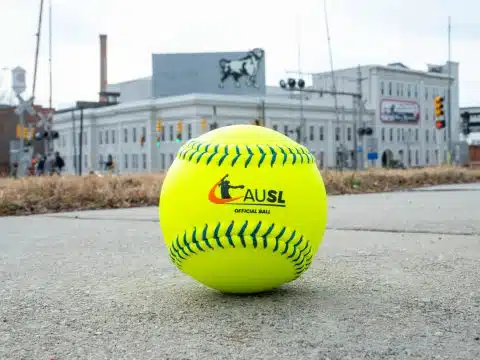
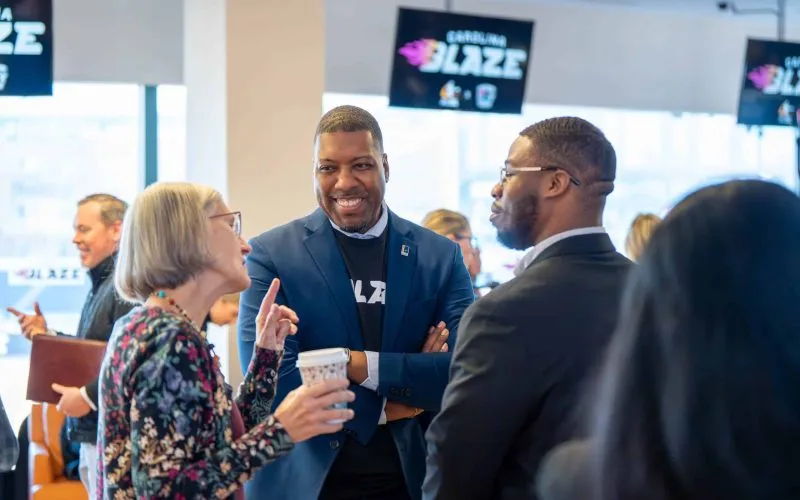
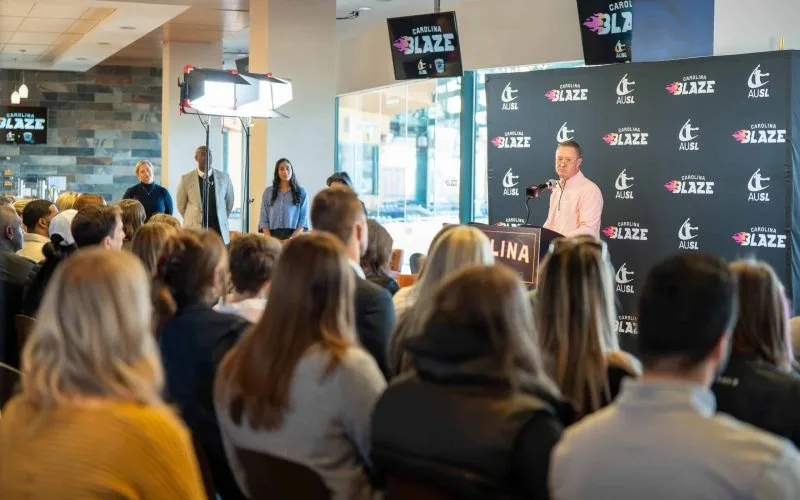
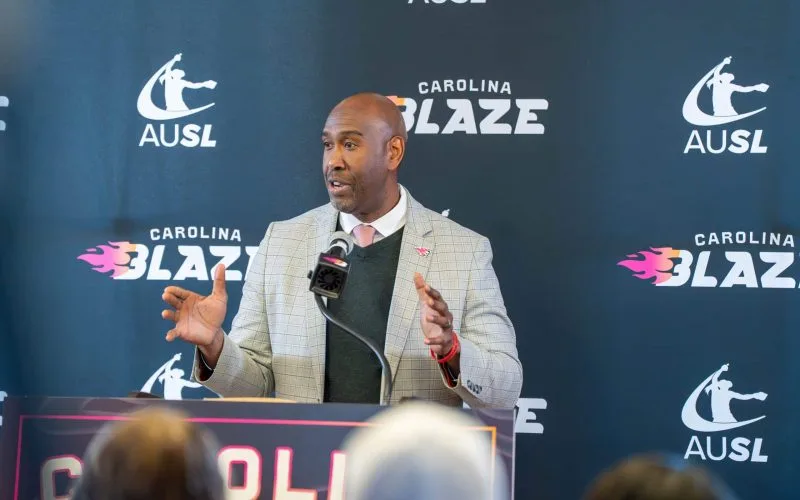
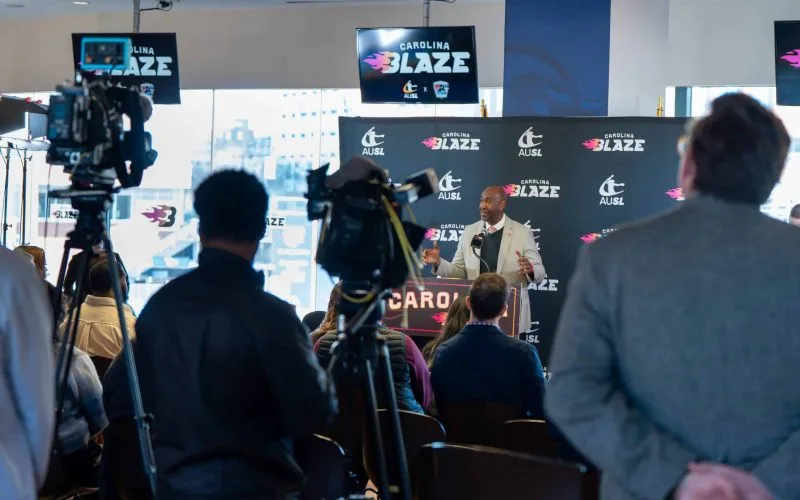
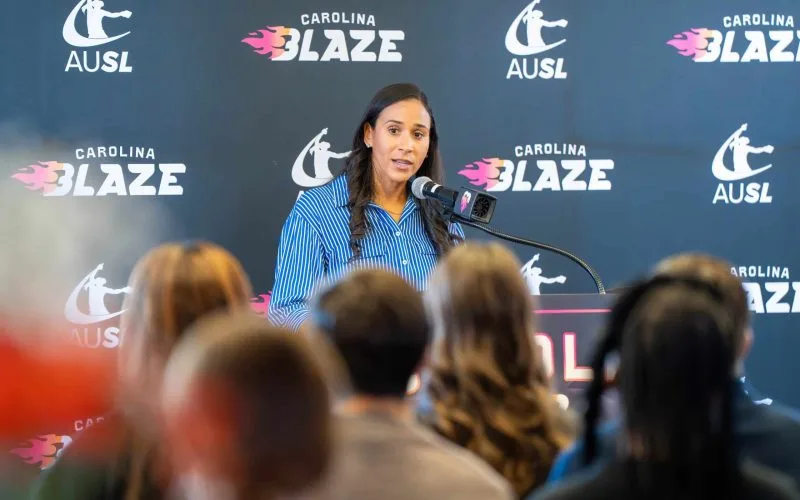
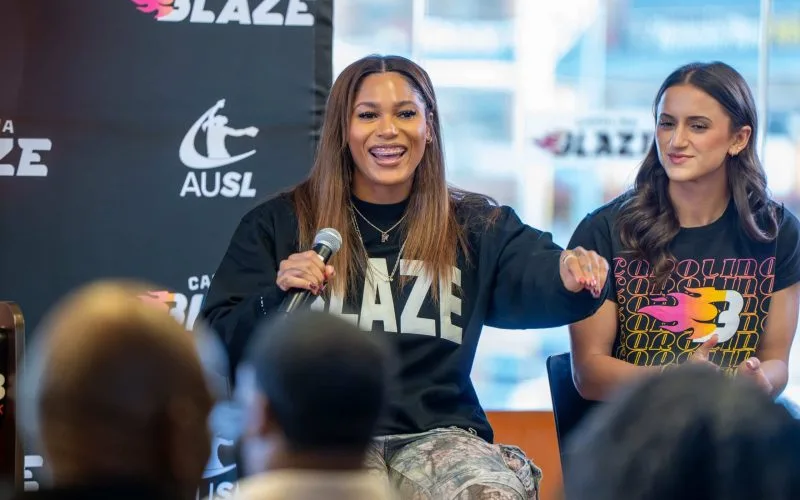
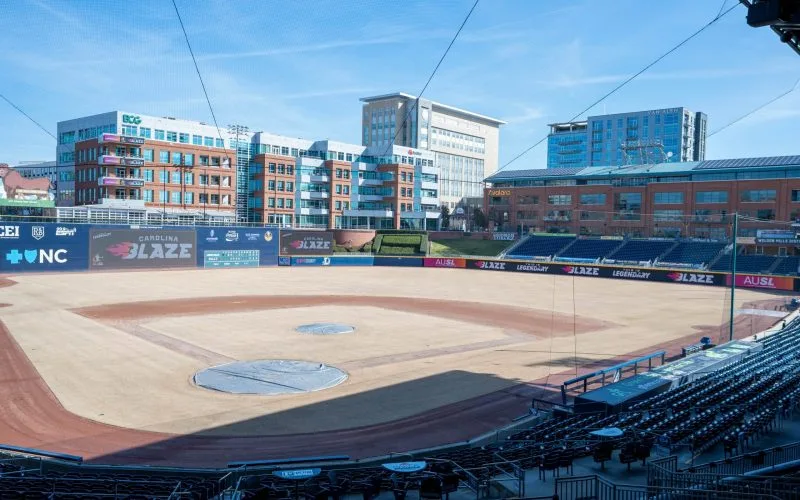
On January 13, the Athletes Unlimited Softball League (AUSL) announced Durham as the home for the Carolina Blaze. The AUSL is the fastest-growing professional sports league in the country, and we are proud to continue that momentum in the 2026 season and beyond. Durham joins Oklahoma City, Chicago, Portland (OR), Round Rock (TX) and Salt Lake City as the six home cities.

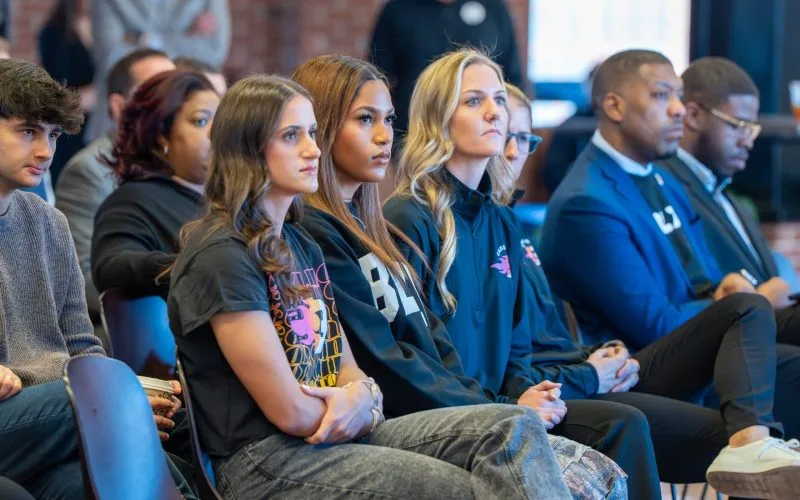
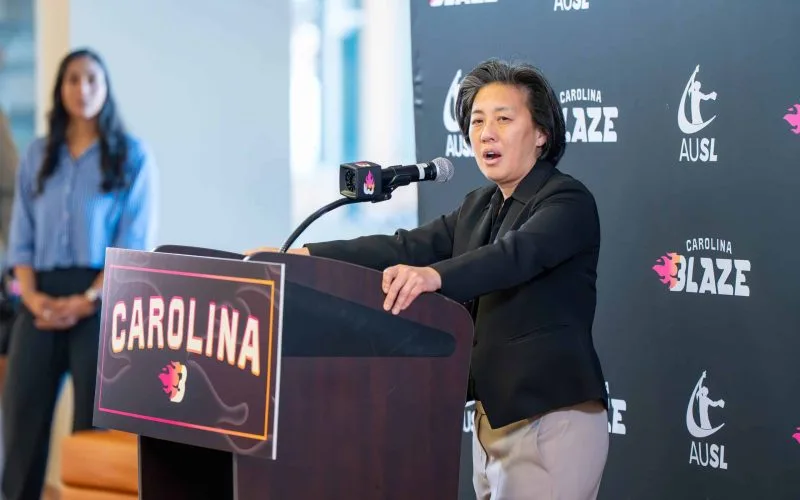
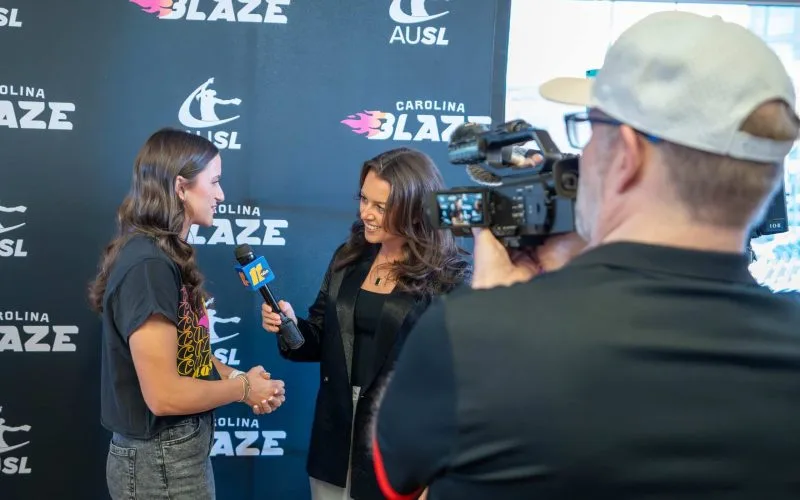
On January 21, members of the Blaze team, coaching staff and AUSL came to Durham to talk with local media and key Durham stakeholders at an event held at Durham Bulls Athletic Park. Fittingly, AUSL Commission Kim Ng announced during the event that the Blaze will play one of their series at Durham Bulls Athletic Park this summer. The rest of the five home stands will be played at Smith Family Stadium on Duke University’s East Campus. Following the media event, AUSL and Blaze personnel headed over to Tobacco Road Sports Cafe, where they got to meet, talk with and sign autographs for fans.

It’s not every day you get a new pro sports team in your city, and safe to say Durham is fired up to welcome the Blaze to the Bull City.

Key Dates

Tuesday, June 9: Opening Day at Smith Family Stadium

Thursday, June 25-Saturday, June 27: DBAP Series

AUSL in Durham Press Release

For more information on the AUSL and Blaze, read the full press release here.

Carolina Blaze Season Tickets

Secure your season tickets for the Carolina Blaze this summer.

Media Coverage

““Our goals are clear. Fostering community pride through a collective effort, providing fans with access and opportunity to a unique and top tier professional softball experience, supporting our leadership and our athletes as the Carolina Blaze pursue an AUSL Championship.”
Marcus Manning
Durham Sports Commission Executive Director

We’re here to make sure you’re a well-informed fan, athlete and event planner who is in the know whether you’re pushing off the starting blocks, it’s the bottom of the ninth or it’s the final two minutes of overtime. 

If it’s your first time in Durham for an event, we have your guides for how to make the most of your experience. If you’re a local looking for sporting events to attend this season, we have you covered with our season previews. And if you want to learn more about sports culture in Durham, you’re in the right place too.  

North Carolina State University Graduate to Combine a Love of Sports, Wellness and Community Outreach to Facilitate Lasting Community Change in New Role


Durham, NC (June 20, 2023) — The Durham Sports Commission (DSC) is excited to announce Lulu Black as the most recent addition to the DSC team. Black recently graduated from North Carolina State University and is looking forward to stepping into a role combining her enthusiasm for sport, wellness, and community outreach. As Assistant Director of the DSC, Black will manage internal operations such as organizational administration along with project management duties. She will also oversee the internship and grants and incentives programs while acting as lead for servicing of all bid-on and local events.

“I feel so thankful and privileged to be brought on as the assistant director for the DSC,” said Black. “Having lived in the Triangle area for several years, it is truly a dream come true to contribute to the betterment of my community. I’m so eager to create an impact and achieve equality for all through sport within the City and County of Durham.”

Prior to joining the DSC, Black was a member of the 2021 and 2022 Women’s Cross Country National Championship team during her time as a student at NC State. She also has experience working with sports organizations on the local, national, and international levels. She was a student intern with the Kay Yow Cancer Fund, an undergraduate research assistant with the NCAA Grant Research Program, and, as a student intern, had the privilege of being part of the North Carolina Bid Committee for the 2027 Summer World University Games. Additionally, she has served as the U.S. Ambassador for the International University Sports Federation.

“In Lulu, we’ve found a bright young mind with the grit, patience, strong work ethic, and teamwork mentality necessary to help further grow the DSC and make an impact on our community,” said Marcus Manning, executive director of the DSC.

Black joins the team at an incredibly exciting time for the DSC. The DSC recently hosted the first ever Emerging Women in Sports Leadership Summit on April 19, as well as various championships, such as the North Carolina High School Athletic Association Lacrosse Championships, Atlantic Coast Conference (ACC) Baseball Championship, Central Intercollegiate Athletic Association Track and Field Championship, and North Carolina High School Athletic Association Softball Championship. As the DSC team works tirelessly to transform the Bull City into a championship hub, Black will be the ideal addition to the team to support these efforts. She will play a key role in the next upcoming DSC-supported event, which will be the Russell E. Blunt East Coast Invitational for track and field held at Durham County Memorial Stadium July 21-23. As a fellow runner, she is especially looking forward to her involvement in this exciting event.

In her role at the DSC, Black will serve as the project manager on DSC projects like bid documents, facility development research, various marketing efforts and owned and operated events. As the key team member in charge of the grants and incentives program, she will coordinate and execute committee meetings, periodically evaluate the program, and oversee the budget. She will be the lead for all bid-on events and the lead contact for volunteers and interns. She will also be in charge of communication with stakeholders for events while reporting and supporting administrative staff at the DSC.

Black grew up in Indianapolis, where sports were an integral part of her community. Because of this upbringing and her personal experiences as an athlete, she is determined to use sports as a catalyst for positive change in the communities she is a part of. Black is the daughter of Scott and Jodette Black and enjoys running on trails, watching sports, being outdoors, making art, and cuddling with her dog Walter in her free time.

For more information about the Durham Sports Commission, please visit www.durhamncsports.com.


About Durham Sports Commission 

The Durham Sports Commission (DSC) is a collaboration of the City of Durham, the County of Durham, the Greater Durham Chamber of Commerce and Discover Durham. The DSC was established in 2016 as a 501(c)(3) with a mission to create economic and social impact by leading the community’s efforts to attract, support, and promote youth, amateur, collegiate, and professional sporting and recreational events and is operated by Discover Durham. The DSC provides leadership for sports-based initiatives and create positive economic impact and quality of life in Durham and the surrounding region. Be sure to follow the DSC on Facebook, Twitter, and Instagram to keep up with all sports-related news in Durham, NC, and other announcements.