

From July 26-August 11 this year, all eyes will be on Paris as athletes from across the globe will compete in their respective sports for the title of best in the world and a gold medal around their neck. While the 2024 games will be taking place over 4,000 miles away, Durham and its two collegiate institutions have and continue to play an integral role in the Olympics. From breaking racial barriers to gold medals, the Olympics truly embody why Durham is the City of Champions.
North Carolina Central University at the Olympics
North Carolina Central University’s history at the Olympics began in 1956 with Lee Calhoun, who won the gold medal in the 110-Meter Hurdles for Team USA (not to mention, the bronze-medalist that year, Joel Shankle, was from Duke). Calhoun helped put Durham on the map as an Olympic hub and received a key to the city upon his return from those 1956 Olympics in Melbourne. He would go on to win gold at the 1960 Olympics, becoming the first male to win consecutive gold medals in the event. That was just the beginning of the NCCU Olympic success.
NCCU would go on to have athletes compete in every year of the Olympics from 1956-1976 and earned ten medals during this stretch, all in track and field events. What did all of these athletes have in common? They were coached by famed NCCU Track & Field coach Leroy T. Walker.
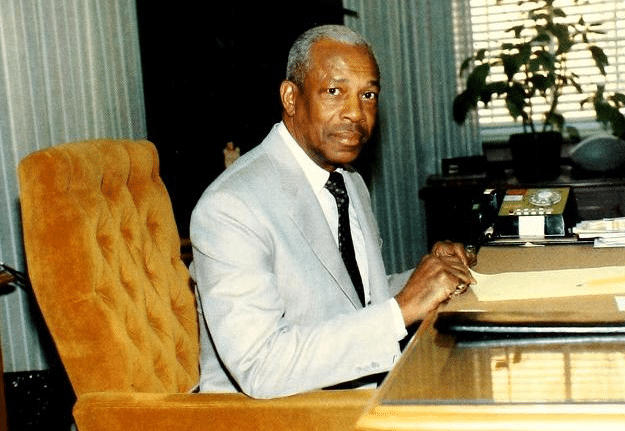
Former NCCU Track & Field Coach and US Olympic President Leroy T. Walker
Walker not only headed the NCCU team, but in 1976, was named the head coach of Team USA’s track & field team, which won 22 medals, including six gold during those Olympics. He would later be named the first Black president of the United States Olympic Committee, blazing a trail for the generations that followed him. Walker also played a key role on the committee to bring the 1996 Olympic Games to Atlanta. During the Olympic Torch Relay prior to those games, he coordinated for the torch to come through NCCU and Duke’s campuses in Durham. He was inducted into the USA Olympic Hall of Fame and the USA Track & Field Hall of Fame.
On the basketball court, famed former NCCU Men’s Basketball Coach John McClendon became the first Black assistant coach on a Team USA Olympic basketball team in 1968, where he helped lead the team to a gold medal in Mexico City. Most recently, Amba Kongolo, one of NCCU’s best women’s basketball players in history, competed in the 1996 Olympics in Atlanta.
Duke University at the Olympics
Like NCCU, athletes and coaches from Duke University have a long history of making an impact at the Games. Since 1956, Duke athletes have won a total of 28 medals, including 13 golds. Former Duke Men’s Basketball Coach Mike Krzyzkewski won three gold medals as the head coach for Team USA and one gold medal as an assistant coach, making him the most successful coach in Team USA basketball history. On the women’s side, former Duke women’s basketball coach Gail Goestenkors won a gold medal as an assistant for Team USA women’s basketball. Current Duke women’s basketball coach Kara Lawson won a gold medal as the head coach in 2020 for the Team USA women’s 3X3 team.
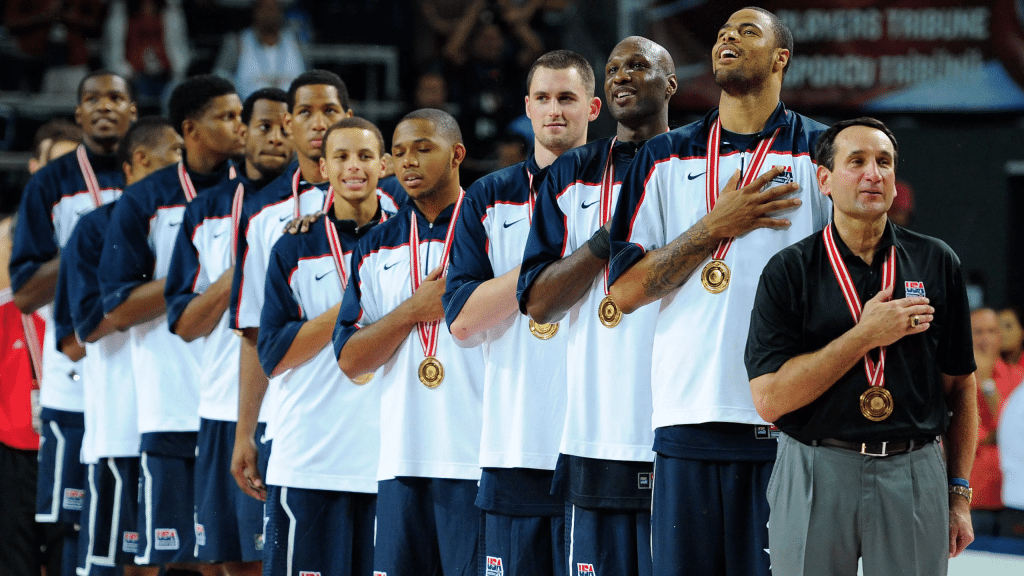
Photo courtesy of Duke Athletics
In the 2024 Paris Olympics, Duke will have 19 current or former student-athletes competing, the most it has ever had in one Olympics. In addition, Coach Lawson will serve as an assistant coach for Team USA’s women’s basketball team, and Duke Assistant Wrestling Coach Ethan Ramos will compete for Puerto Rico.
These 19 athletes represent 12 different countries competing across nine different sports, including men’s and women’s basketball, women’s soccer, fencing, athletics, golf, triathlon, decathlon and field hockey.
Tune into the Olympics from July 26-August 11, and follow @durhamncsports on social for updates as these athletes compete.