By William Townsend
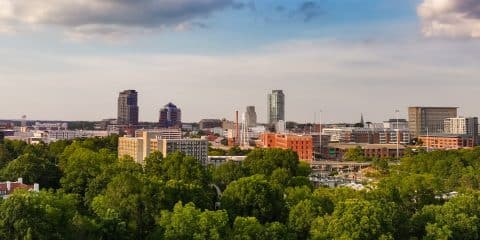
Whether it’s basketball games that were sworn to secrecy due to Jim Crow, a plethora of baseball outlets for African American individuals, or even the continuous memorable figures in our community, one thing remains true: sports have been a backbone in establishing culture and connection in Durham for the African American community. Come along on this journey with us as we release four separate blogs, spanning across eras, detailing the continued growth of Durham sports culture and shedding light on influential individuals and significant moments.
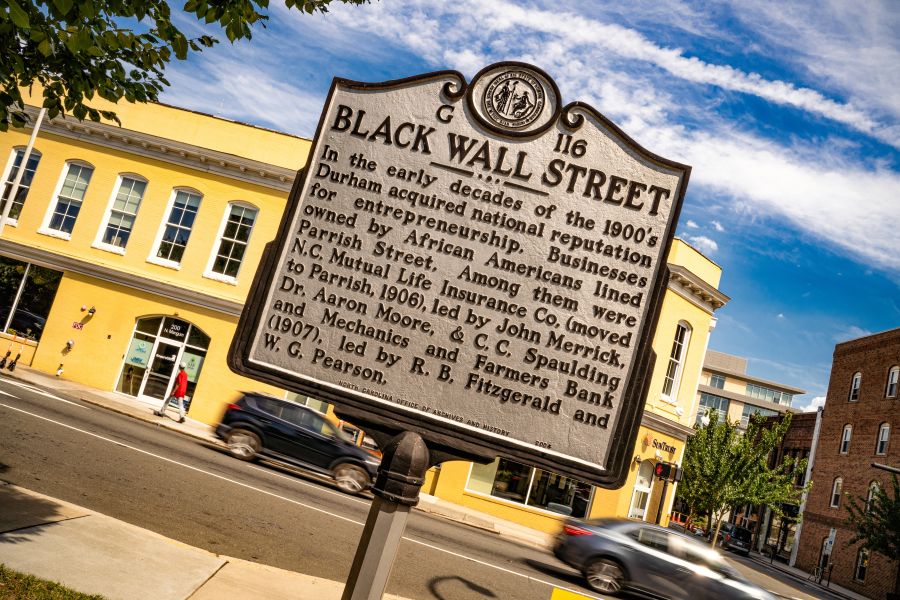
In the early 20th century, Durham’s Black Wall Street was a hub for African American businesses and finances in the early 1900’s, including influential businesses like Mutual Life Insurance and Mechanic & Farmers Bank. Some of the Black figures behind the overall growth of what is called the African American middle class came to fund several key educational and athletic endeavors later down the line in Durham.
The late 19th and early 20th centuries were important periods for many academic institutions in Durham. In 1887, Whitted School was established as the first public Black school in Durham. While it went through multiple changes and was burned down multiple times, it was eventually renamed Hillside Park High School in the early 1920s. Only a few miles away, in 1910, the National Religious Training School and Chautauqua was founded by James E. Shepard, a quieter but important figure in Durham’s Black Wall Street. This school eventually became North Carolina College at Durham and, later, North Carolina Central University. By the 1920s, NCCU already had a plethora of sports teams, and in its first year, fielded a baseball team. Alumni from Hillside Park High School, Leo Townsend, took over the football team in 1926 and became the first coach to boast bragging rights in the popular rivalry versus North Carolina Agricultural and Technical State University (NCAT), winning four times in a row from 1930 to 1933. They went on to join the Central Intercollegiate Athletic Association (CIAA) in 1928.
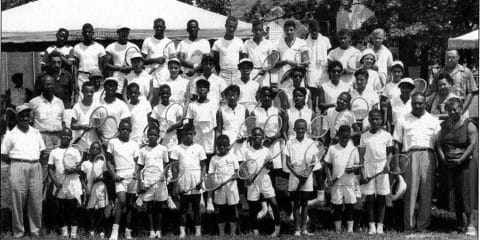
Although Durham was a hub for African American wealth and sports in general were on the rise, Jim Crow still impacted this growth. Even qualified Black athletes and Black leaders were barred from certain spaces in Durham. A growing need for another space within the Durham Black community became apparent. In 1922, the Algonquin Tennis & Social Club was founded in the Hayti district of Durham. It became a meeting place for African American business leaders, educators, and politicians. As part of the American Tennis Association, the nation’s first professional sports league for African Americans, the Algonquin Tennis Club hosted tournaments and exhibitions for Black athletes, including Althea Gibson, Arthur Ashe and Irwin Holmes. Like this club, many other leagues were beginning to carve out their own spaces in Durham.

In this early era of American sports history, baseball had begun to emerge as the ultimate symbol of American sports. Since 1846, the game had continued to evolve and grow across the nation. But even a sport played on a field wasn’t immune to Jim Crow. Black players were forced to play in alternative leagues, due to the baseball color line established in the late 19th century, which barred non-white players from participating in the major leagues and prevented African Americans from showcasing their talent. This all changed in 1920, when the first Negro League was created by Rube Foster.
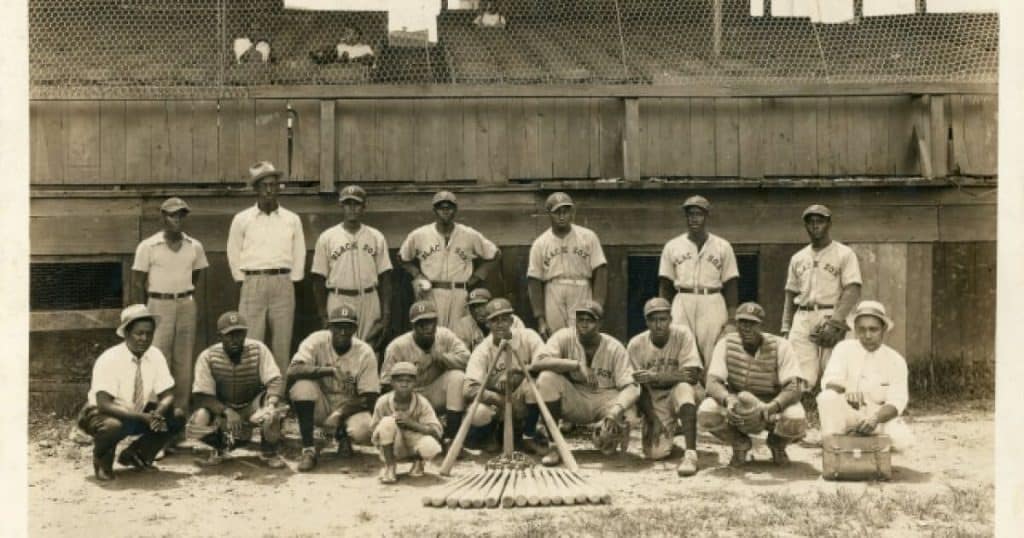
These leagues needed cities and places to play. This is when Durham took one of its first swings not only at sports in general but also at professional leagues. Durham had three official teams spanning from the 1920s to the 1960s: the Durham Eagles, the Rams, and the most popular, the Durham Black Sox. One of the most notable players from the Black Sox was John Quincy Barbee, better known as ‘Bud Barbee.’ He went on to play for several teams in New York, Canada, and even Mexico. He even reportedly defeated Satchel Paige in a contest in Puerto Rico. He was said to be so talented that he would have played in the majors if integration had occurred earlier. ‘Bud’ and these players competed at El Toro Park, now known as the Durham Athletic Park in downtown Durham. Mr. Thomas Stith Sr. was known for helping develop the Durham Athletic Park during the 1930s and 1940s. Highlighting this history is important in a world where people in power consistently cover up Black success.
Black sports in Durham were just getting started and beginning to gain momentum as an important cultural force within the community. But as times changed and leagues became more organized, a new set of questions moved to the forefront. Questions that had lingered since the earliest days of organized sports in the United States. Could Black players truly compete against their white counterparts? Did Black athletes even belong in these spaces? These questions, long whispered and openly challenged, were no longer avoidable. And soon, Durham would be forced to confront them.